

SAN JUAN, PUERTO RICO — The issue surrounding Puerto Rico’s participation in the World Baseball Classic continues to be top news on the island and extends beyond the fact that several players have been ruled ineligible because of insurance coverage requirements.
According to Puerto Rican Baseball Federation president Dr. José Quiles Martínez, the situation feels like a lack of respect toward Puerto Rico. He says the federation was instructed to submit its provisional roster by December 3rd and complied on time. However, it was not until January 30th that officials were informed that several of the team’s star players would not be cleared to participate due to insurance-related issues.
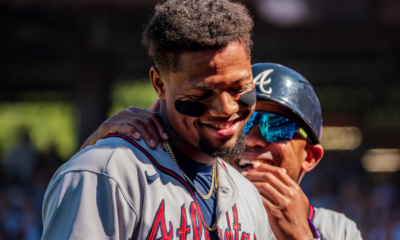
At the same time, other sources indicate that Francisco Lindor (2016 AL LatinoMVP and 2024 NL LatinoMVP) was notified of his own situation by the MLB Players Association approximately two weeks earlier.

The news of Francisco Lindor not being able to play in the 2026 World Baseball Classic shocked the sports world over the weekend – Image Credit: Ernesto Diaz/Latino Sports
It has also been noted that all 30 federations have participated in multiple operational meetings throughout 2025, were aware of the process and deadlines, and are subject to the same regulations.
Still, Dr. Quiles argues that Puerto Rico has been left with very little time—as of January 31—to rebuild a significant portion of its roster. He believes the late decisions place Puerto Rico at a competitive disadvantage and raise concerns about fairness and transparency. As of now, Puerto Rico reportedly has 24 players approved, with nine still pending arrival. Even so, there is disappointment among fans and coaches that many of the island’s MLB stars will not be part of the 2026 squad, potentially leaving the team less competitive than in past tournaments.

Javier Báez, a two-time LatinoMVP Award winner in 2016 and 2018, is expected to participate in the 2026 WBC for Puerto Rico after being cleared to play despite his past injury history – Image Credit: Larry Arreguin/Latino Sports
Another major concern is that Puerto Rico is serving as a host of the tournament. Not being able to field a star-level team on home soil would be anticlimactic for fans, many of whom have spent significant money traveling to Puerto Rico in hopes of seeing their favorite Puerto Rican stars—players they may not otherwise have the opportunity to watch in person. This could affect the overall atmosphere of the event.
The situation is especially significant given the investment the Puerto Rican government has made to upgrade Hiram Bithorn Stadium and related facilities for the tournament, as well as the potential economic impact on local merchants who were expecting increased business from visiting fans

The Puerto Rican government and many others on the island came to together to make major upgrades to Hiram Bithorn Stadium in San Juan prior to hosting Pool A play in the 2026 World Baseball Classic – Image Credit: World Baseball Classic
Dr. Quiles and others have also questioned the perceived consistency of eligibility decisions. Around Major League Baseball, there are high-profile players managing injuries. For example, Shohei Ohtani is expected to participate as a hitter, though he has not been cleared to pitch. Players such as Aaron Judge and Ronald Acuña Jr. have also dealt with injuries in recent seasons but have not automatically been ruled out of international play.
These comparisons have led some observers to wonder why Puerto Rico appears to be facing stricter interpretations in certain cases, though MLB has maintained that medical, contractual, and insurance evaluations are handled individually.

Aaron Judge (USA), Shohei Ohtani (Japan) and Ronald Acuña Jr. (Venezuela), the best players for each of their respective native countries were given a go to play in the 2026 WBC even though the trio have gone through injuries in the past – Image Credit: Bill Menzel, George Napolitano and Simon Lindenblatt/Latino Sports
Speculation has also surfaced about the broader business interests tied to the tournament. If Puerto Rico were to advance from its pool, it could affect potential late-round matchups. Many fans remember the dramatic conclusion of the last World Baseball Classic, when Shohei Ohtani struck out Mike Trout to secure the title for Japan—a moment that became one of the most iconic in recent baseball history. A USA vs. Japan rematch would undoubtedly draw strong global ratings.
There is no concrete evidence of favoritism. However, critics argue that the optics of a host nation losing key stars while powerhouse matchups remain possible naturally raise questions.

No Francisco Lindor and Carlos Correa in the 2026 World Baseball Classic is a major blow for Puerto Rico as well as the whole tournament and its marketability – Image Credit: Bill Menzel/Latino Sports
At the same time, history shows that it is in MLB’s and the tournament’s best interest to have as many of the world’s top players participating as possible, since star power benefits the event globally.
Another factor is Puerto Rico’s relatively small pool of Major League players compared with countries such as the Dominican Republic or Venezuela. When a few elite Puerto Rican players are unavailable, there are simply fewer MLB-level replacements, which can have a greater impact on overall team strength.

The official tournament format of the 2026 World Baseball Classic, set to start on March 5th and conclude on March 17th – Image Credit: World Baseball Classic
If there is a long-term lesson in this situation, some believe it is the need to continue developing more baseball talent on the island. Countries like the Dominican Republic and Venezuela benefit from extensive MLB-run academy systems. In Puerto Rico, many private baseball academies operate with limited resources and often struggle to expand outreach into towns where local Little League programs are barely surviving and receive little or no government support.
Without stronger investment in youth baseball—from grassroots programs through high school—the number of Puerto Rican players reaching the Major Leagues could continue to decline. One positive development is the Puerto Rico Challenge, organized by Jorge Medina of Jogi Sports, which brings NCAA Division I college baseball teams to compete on the island and includes free educational seminars for parents, students, guidance counselors, and coaches about the college recruiting process. The event is now in its second year, with games scheduled for February 13–16, 2026.

The Puerto Rico Challenge, organized by Jorge Medina and Jogi Sports, with eight NCAA Division I college baseball programs, is scheduled to take place on February 13th-16th- Image Credit: Puerto Rico Challenge
Across the island, many parents, coaches, and Little League organizers echo the same concern: there is limited support, and in many cases no consistent government backing, for local youth sports programs.
If that trend continues, Puerto Rico risks facing similar challenges in future international competitions—not just in the World Baseball Classic, but across the broader landscape of elite baseball.
Follow us on Social Media for updates and exclusive content
Instagram: @latinosportsoficial
Facebook: Latino Sports
Twitter: @latinosports